Biofuels & SAF · 9 October 2026 · Project door
Europe cleared its first SAF hurdle on imported waste oil, but the e-fuel capacity behind the 2030 target is barely built
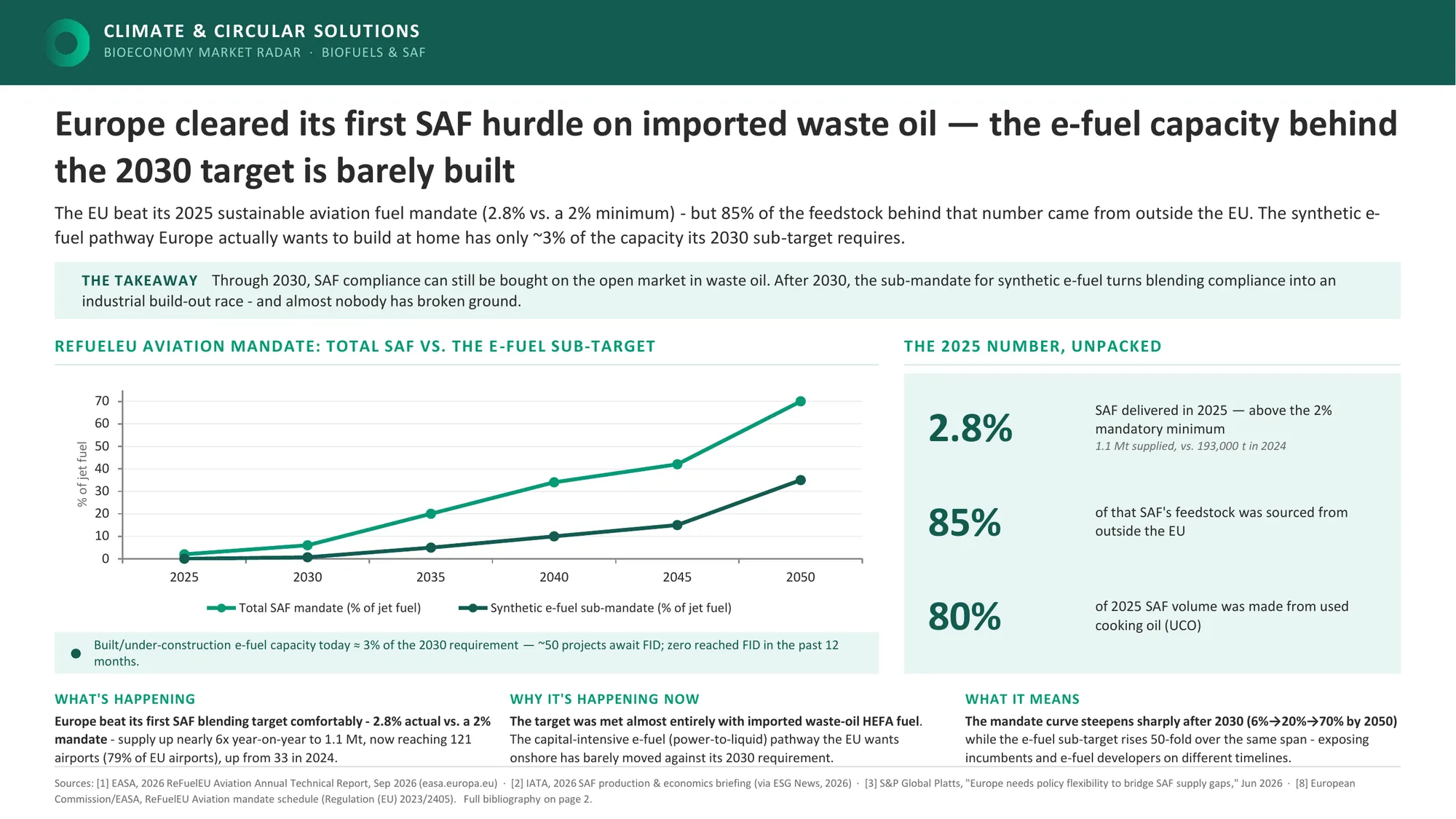
The EU beat its 2025 SAF mandate (2.8% vs 2%), but built e-fuel capacity covers only ~3% of the 2030 sub-target.
Key figures
- The EU beat its 2025 ReFuelEU Aviation mandate: 2.8% sustainable aviation fuel against a 2% minimum, about 1.1 Mt and roughly six times the previous year.
- 85% of the feedstock was sourced outside the EU, and about 80% of the volume was used cooking oil.
- The synthetic e-fuel sub-mandate starts at 0.7% in 2030 and rises to 35% by 2050.
- Only about 3% of the capacity required for 2030 is built or under construction. Around 50 projects await a final investment decision, and none reached one in the past twelve months.
Our analysis
Meeting the first mandate with imported waste-oil volumes says little about the harder sub-target. Developers of e-fuel and advanced-fuel projects should expect funders to focus on offtake, feedstock and the path to a final investment decision.
Sources
- EASA, 2026 ReFuelEU Aviation Annual Technical Report (September 2026)
- IATA, 2026 SAF economics briefing, via ESG News
- S&P Global Platts / Energy Horizons webinar (June 2026)
- ING Research (2026)
- Regulation (EU) 2023/2405 (ReFuelEU Aviation)
The infographic is published in English.
Read next
Get the Bioeconomy Radar by email
Each new edition sent by email when it is published, before it is collected here. We use your email only to send the Radar. To unsubscribe, reply to any edition or write to contact@climate-circular.com.
Financing a biomass project? We turn market evidence like this into a decision you can take.